



Resource Center
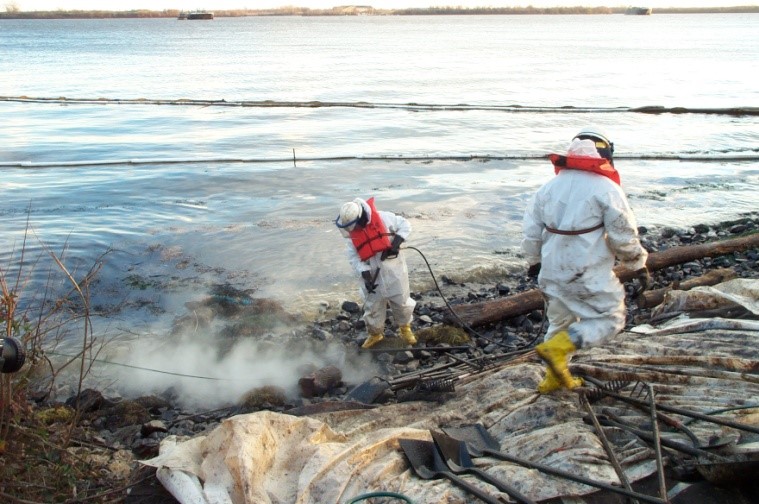
Delaware River Oil Spill Response
Learn how NRC, a recent Republic Services acquisition, responded to a tri-state riverbank oil spill.Byline: BTB Author
October 27, 2016 / Time to read: 5 minThe Challenge
On November 26, 2004, the M/T Athos I struck a submerged object while navigating the Delaware River. Damage to the vessel caused the discharge of more than 263,000 gallons of crude oil into the river, contaminating more than 57 miles of riverbank in Pennsylvania, Delaware and New Jersey.
Due to the heavy nature of the oil — as well as the speed of the river — the spill spread to beaches, marinas, pier faces and trapped vessels. The USCG closed the Port of Philadelphia, and more than 39 vessels required steam cleaning.
The Solution
NRC, a recent Republic Services acquisition, was the primary Oil Spill Removal Organization (OSRO) for the tank vessel Plan Holder. At the peak of the field efforts, NRC oversaw 1,700 contractor personnel who were operating more than 130 boats and tending almost 40,000 feet of boom. NRC also directed two of its oil spill response vessels (OSRVs) in both skimming and safety.
During the 6-month active phase of the cleanup, NRC was responsible for the following:
- Building a dozen cleaning task forces, based on NRC aluminium portable barge sets, and equipping them with light kits, portable lavatories, hot water pressure washers, personnel to conduct 24-hour operations
- Siting, building and operating a 9-acre decontamination/demobilization facility to assist in the timely removal of assets from the job as tasking was reduced
- Overseeing 17 separate contractor companies in the field
- Ensuring safe operations in cold and inhospitable conditions
- Providing the USCG and local Pilot Association with regular updates on the cleanliness of trapped vessels
- Keeping local clients informed of progress and the status of port reopening
Disposal during the active cleanup phase amounted to:
- 11,000 tons oily solids
- 4,000 gallons oil
- 60,000 gallons of oily water
After the 6-month active cleanup, the Unified Command determined that all the environmental, public health and safety objectives had been achieved. Ongoing maintenance lasted another 6 months.
The Outcome
The response to this event was very successful. The goal was to clean up the spill as quickly as possible while addressing any concerns from regulatory agencies and local stakeholders and enabling the vessel to resume routine operations as quickly as possible. The operation was completed safely with no injuries.


