



Resource Center

Recycling Numbers & Symbols Explained
The chasing arrows “recycling” symbol doesn’t mean an item is recyclable. It indicates what it’s made of. Decode recycling symbols and numbers in this blog.Byline: BTB Editor
December 3, 2024 / Time to read: 5 minSome people don’t recycle because they don’t understand it. In fact, according to the
So if you find recycling confusing too, you're not alone. We’re here to help!
The Meaning of the Recycling Symbol
At some point at home or at work, you’ve probably scanned an empty container or packaging for the chasing arrows symbol before sorting it into a recycling bin. These triangular arrows, often referred to as the "recycling symbol" or Mobius loop, can be found on products we use every day.
The chasing arrows symbol does NOT always mean an item is accepted in curbside recycling. Some items with this symbol may need special handling, for example at a dedicated recycling drop-off center.
Here’s what the symbol can mean:
- Blank center: An item MAY be recycled. Check with your local recycling center to see where and how to recycle it.
- Percentage in the center: How much of that item was made from recycled material.
- Number in the center: The type of plastic an item is made from.
Labels like these can confuse people about what items they can recycle, resulting in tons of non-recyclable products ending up in recycling carts each year.
SB 343 Clarifies the Use of the Recycling Symbol
Building a cleaner and more sustainable future requires meaningful solutions. That’s why we supported California’s
Thanks to SB 343, beginning in 2024, the chasing arrows symbol indicates materials that can be recycled into new products and packaging, clearing up confusion at the recycling bin and reducing recycling contamination.
Why Recycling Numbers & Symbols Matter
Recycling numbers and symbols, found on various products and packaging, indicate important information about recyclability, material composition and disposal methods. Recognizing these symbols — and following their guidelines — helps reduce

There are seven different
Keep an eye out for these plastic recycling symbols (see symbols above):
PET-1: Polyethylene Terephthalate (PET or PETE)
- Used for food and drink containers
- Commonly accepted by municipal recycling program
HDPE-2: High-Density Polyethylene (HDPE)
- Used for colored or opaque containers, like milk jugs and detergent bottles
- Commonly accepted by municipal recycling programs
V-3: Polyvinyl Chloride (PVC)
- Used for children's toys, plastic wrap and plastic pipes
- Not usually accepted for recycling (check with your local recycling center to see if they accept it)
LDPE-4: Low-Density Polyethylene (LDPE)
- Used for thin, flexible items, like plastic bags and frozen food wrappers
- Not usually accepted in curbside recycling (though commonly accepted at grocery stores)
PP-5:Polypropylene (PP)
- Used for straws, soft drink cups, condiment bottles and other food containers
- Check with your local recycling center to see if they accept it
PS-6: Polystyrene (PS)
- Used for foam-like plastic items, like takeout containers and single-use cups
- Not usually accepted for recycling (check with your local recycling center to see if they accept it)
O-7: Other
- Encompasses a variety of plastics, including polycarbonate and bio-based plastics used for baby bottles and five-gallon water jugs
- Not usually accepted for recycling (check with your local recycling center to see if they accept it)
How to Find Recycling Numbers on Plastics
Typically, you can find recycling numbers molded into or stamped onto the bottom of plastic containers. Some products may feature the recycling number inside the chasing arrows symbol on the side of a product or near the product label. If you can't find a number, check with your local recycling facility or recycling collection provider to see if they accept unmarked plastics based on their use and appearance.
Glass is made from sand and limestone, so it’s
Note: Some items containing glass — like cookware, drinkware, mirrors or windows — are manufactured differently and aren’t accepted for curbside recycling. For
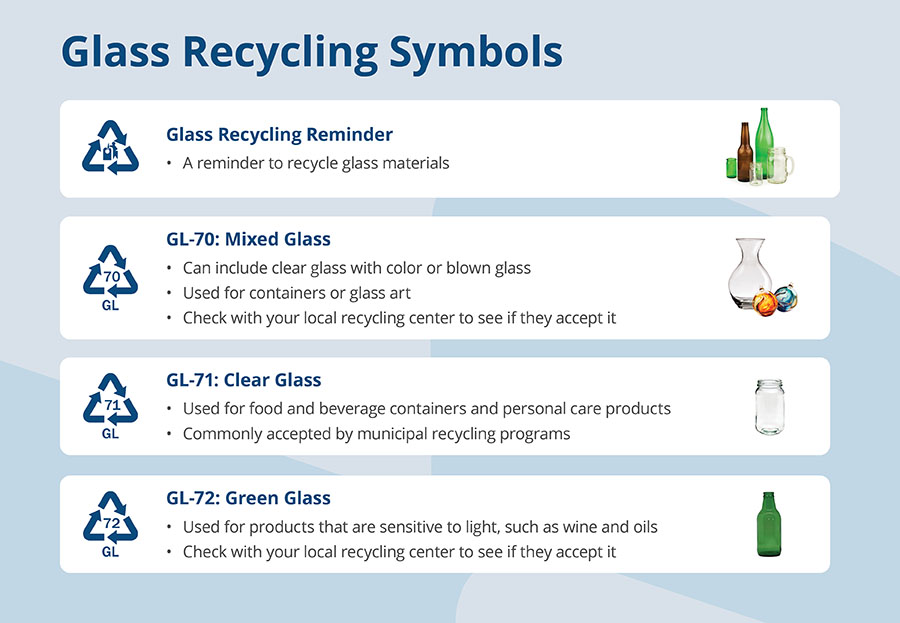
Keep an eye out for these glass recycling symbols (see symbols above):
Glass Recycling Reminder
- A reminder to recycle glass materials
GL-70: Mixed Glass
- Can include clear glass with color or blown glass
- Used for containers or glass art
- Check with your local recycling center to see if they accept it
GL-71: Clear Glass
- Used for food and beverage containers and personal care products
- Commonly accepted by municipal recycling programs
GL-72: Green Glass
- Used for products that are sensitive to light, such as wine and oils
- Check with your local recycling center to see if they accept it
Clean, uncoated
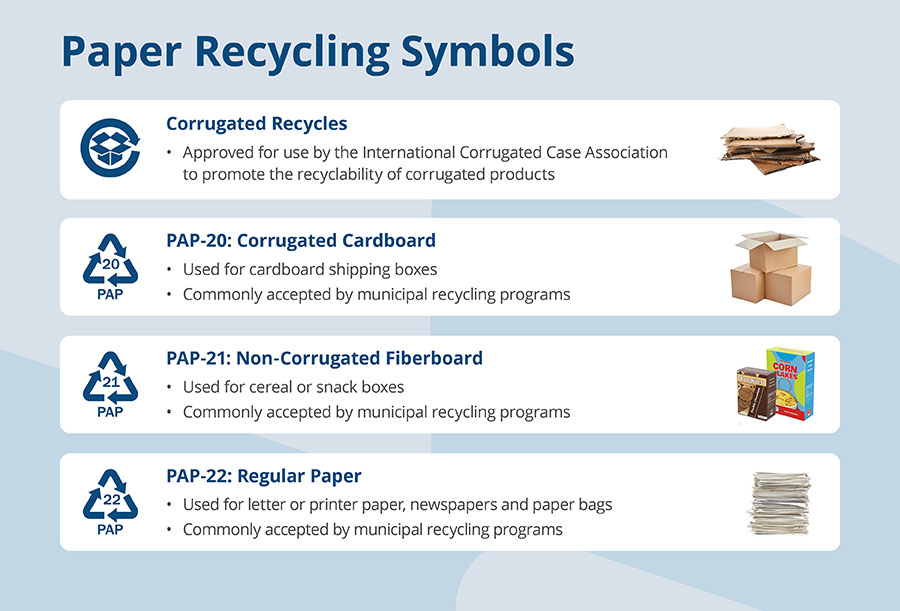
Keep an eye out for these paper recycling symbols (see symbols above):
Corrugated Recycles
- Approved for use by the International Corrugated Case Association to promote the recyclability of corrugated products
PAP-20: Corrugated Cardboard
- Used for cardboard shipping boxes
- Commonly accepted by municipal recycling programs
PAP-21: Non-Corrugated Fiberboard
- Used for cereal or snack boxes
- Commonly accepted by municipal recycling programs
PAP-22: Regular Paper
- Used for letter or printer paper, newspapers and paper bags
- Commonly accepted by municipal recycling programs
Many
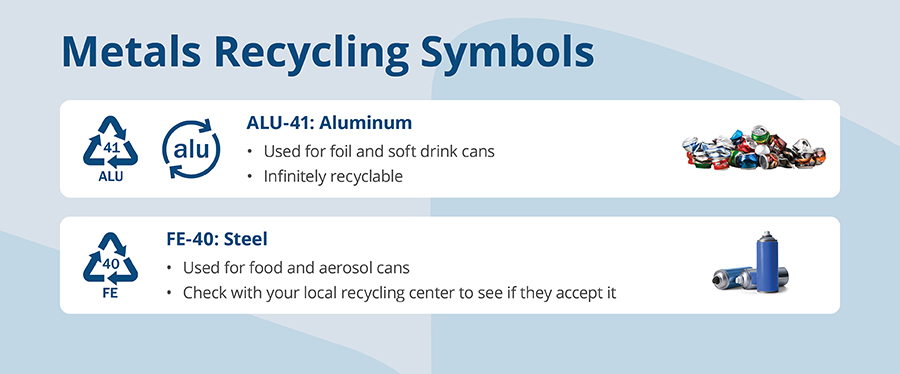
Keep an eye out for these metal recycling symbols (see symbols above):
ALU-41: Aluminum
- Used for foil and soft drink cans
- Infinitely recyclable
FE-40: Steel
- Used for food and aerosol cans
- Check with your local recycling center to see if they accept it
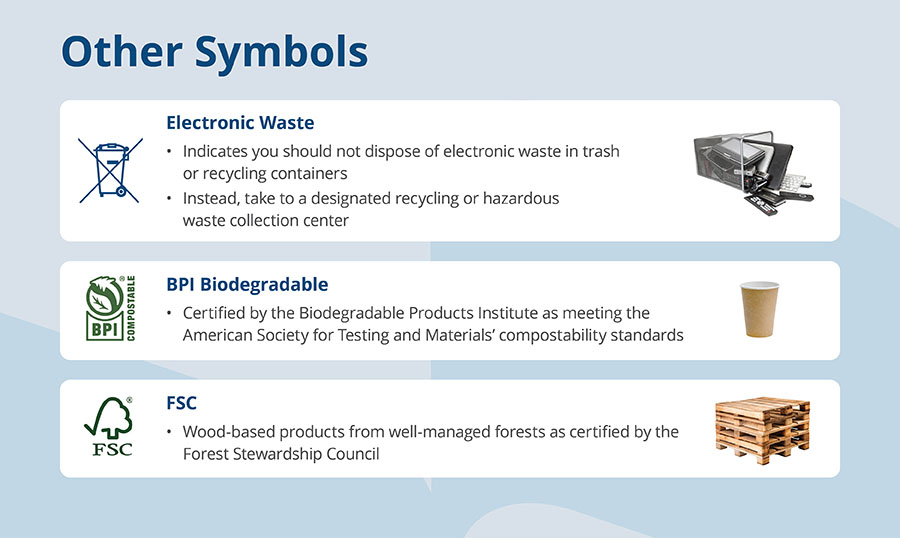
Keep an eye out for these other recycling symbols (see symbols above):
Electronic Waste
- Indicates you should not dispose of electronic waste in trash or recycling containers
- Instead, take to a designated recycling or hazardous waste collection center
BPI Biodegradable
- Certified by the Biodegradable Products Institute as meeting the American Society for Testing and Materials' compostability standards
FSC
- Wood-based products from well-managed forests as certified by the Forest Stewardship Council
How to Recover and Recycle Key Materials
You can help preserve natural resources by recovering and recycling key materials, which diverts these items from landfills and supports the circular economy. Here’s how to properly recycle:
Unbagged
Sorters at the recycling facility can’t filter through what’s in a bag, so
Empty, Clean and Dry
Dirty or wet recyclables can contaminate the entire bin. Remember that only
Know What To Throw
Flattened cardboard, paper,
Support Sustainable Recycling
You can become a better recycler by being aware of these symbols and their meaning. Make sure you understand the basics and visit
Want to learn more about sustainable recycling? Our Polymer Centers use an integrated process to manage the plastics stream from curbside collection to the production and delivery of high-quality recycled content for consumer packaging. See how we’re increasing the


